
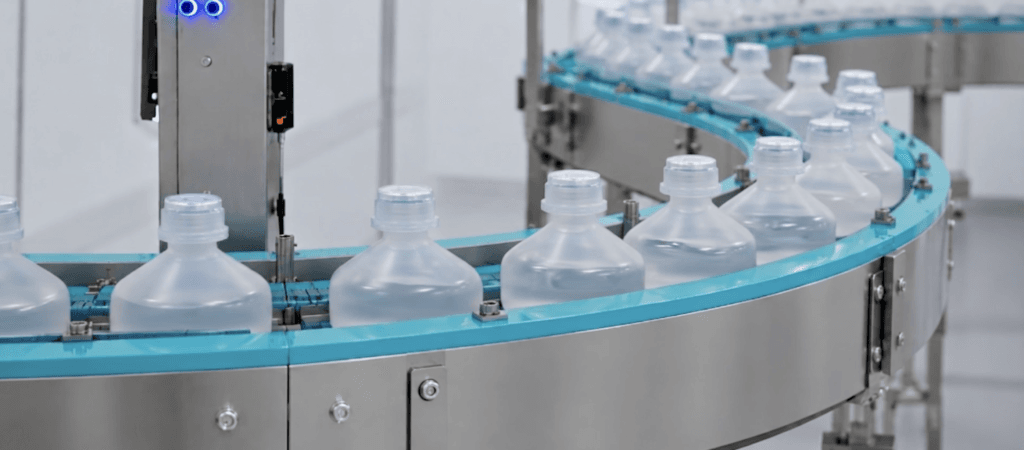
Polymer Co-Injection Caps for BFS and FFS Large Volume Parenteral (LVP) Packaging
Understanding BFS and FFS Packaging Technologies and Co-Injection Cap Solutions
In the LVP packaging industry, Blow-Fill-Seal (BFS) and Form-Fill-Seal (FFS) represent two leading plastic packaging technologies, with polymer co-injection caps serving as critical components ensuring sterility and seal integrity.
At the heart of both technologies is the co-injection molding closure — a precision-engineered component that consolidates multiple material functions into a single, seamlessly manufactured unit. This article explores both processes and their distinct requirements for cap performance.

1. Blow-Fill-Seal (BFS) Process Explained
The BFS LVP packaging process uses granular polymer resins—PP, LDPE, or HDPE—fed centrally into an extruder and heated to temperatures exceeding 170°C. The complete workflow includes:
- Extrusion of a thermoplastic parison
- Continuous, highly automated filling with pharmaceutical solution
- Container sealing
- Heat-welding of the polymer co-injection cap to the filled container
- Terminal moist heat sterilization
Key advantage: The entire parison forming and filling process takes place in a Grade A aseptic environment, eliminating contamination risks from human intervention. The extruder’s elevated temperature, pressure, and enclosed design significantly reduce the likelihood of contaminants—such as particulates, fungi, bacterial spores, and endotoxins—coming into contact with the final filled product.
Therefore, BFS LVP packaging offers low risks of particulate contamination, highly reliable aseptic sealing, and minimal potential for cross-contamination. Unlike the traditional combination cap in pharma — which relies on a multi-step assembly of plastic and thermoset rubber — the polymer co-injection cap’s integrated design removes an entire class of contamination risk from the production process.
Because the closure does not require prolonged direct contact with the drug solution throughout the manufacturing process, polymer co-injection caps emerged as an ideal solution for BFS applications. Combining excellent mechanical performance, consistent sealing integrity, and efficient manufacturability, they have become the preferred closure technology for BFS LVP packaging.
2. Form-Fill-Seal (FFS) Process Explained
The FFS process involves a more complex sequence of steps: film unwinding, printing, port pre-heating, edge sealing, port sealing, bag cooling and shaping, trim removal, filling, and final cap heat-sealing.
Because of how FFS filling works, the cap must remain in long-term direct contact with the drug solution. As a result, polymer co-injection caps used in FFS applications must exceed the proven performance of BFS-grade caps, incorporating additional requirements for sustained drug-contact compatibility.
The convergence of precision co-injection molding with AI-driven manufacturing has given rise to a new generation of polymer co-injection caps purpose-built for FFS LVP packaging—exemplified by products such as JSD Cap® (TPE Euro Cap). Cap designs for this segment continue to evolve, progressing from film-attached caps to innovative pull-ring and snap-off structures that meet a wide range of clinical usage needs.
3. BFS vs. FFS: Container Performance Comparison
Any meaningful parenteral packaging closure comparison must account for both the container format and the closure’s material composition, sealing structure, and drug-contact compatibility.
Characteristics of BFS LVP Containers
| Performance Metric | Rating |
|---|---|
| Sterility Assurance | High (Grade A laminar airflow with a fully enclosed process) |
| Seal Reliability | High (Integrated molding eliminates conventional sealing defects) |
| Material Flexibility | Limited (Primarily compatible with polyolefins such as HDPE, LDPE, and PP) |
| Packaging Cost | High (Requires substantial capital investment in specialized equipment and tooling) |
| Gas Barrier Properties | Low |
Characteristics of FFS LVP Containers
| Performance Metric | Rating |
|---|---|
| Sterility Assurance | Moderate (Dependent on cleanroom classification and environmental controls) |
| Seal Reliability | Moderate (Dependent on the consistency of heat- or cold-sealing processes) |
| Material Flexibility | High (Compatible with polyolefins, multilayer composite films, aluminum-plastic laminates, and single-layer films) |
| Format Flexibility | High (Supports rapid changeover between different roll-stock materials and package formats) |
| Packaging Cost | Low (Lower capital investment and high production efficiency) |
| Gas Barrier Properties | High (Barrier properties can be customized through multilayer material design) |
4. Choosing the Right Polymer Co-Injection Cap
BFS and FFS each offer distinct advantages: BFS excels in sterility assurance and seal reliability, making it ideal for products with stringent aseptic requirements. In both formats, closure-side leakage prevention is a non-negotiable performance criterion — any breach between the closure and the container port compromises drug sterility and patient safety. FFS, on the other hand, offers superior material versatility and cost efficiency, suited to applications requiring diverse packaging formats.
Regardless of the chosen packaging format, cap material performance, sealing structure design, and drug compatibility remain the decisive factors in final product quality. A qualified co-injection cap supplier should be able to provide customized solutions tailored to the unique requirements of both BFS and FFS processes.
Partner with Experts in Pharmaceutical Cap Solutions

Whether your production line uses BFS or FFS technology, selecting the right polymer co-injection cap requires deep expertise in materials science, regulatory compliance, and precision manufacturing.
JSD Pharma Group specializes in developing tailored co-injection cap solutions for LVP packaging, combining advanced material formulations with AI-enhanced precision molding to meet the stringent demands of both BFS and FFS applications. Whether you’re transitioning from combination caps or scaling a new FFS line, our team can provide the technical validation and regulatory support you need.
Contact us today to discuss your packaging requirements and discover how our co-injection cap and Euro Cap technology can enhance the safety, efficiency, and quality of your pharmaceutical products.
