
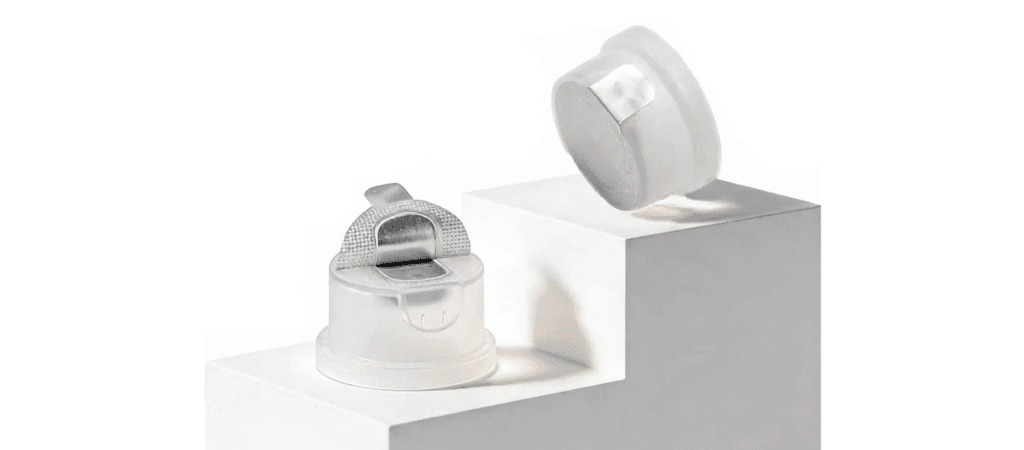
JSD Cap® vs. Traditional Infusion Closures: A New Standard for Parenteral Packaging
Traditional combination caps — the plastic and rubber closures widely used in parenteral packaging, particularly for large-volume parenteral (LVP) infusion products — are manufactured through a multi-step process: plastic injection molding, thermoset rubber cross-linking, and mechanical assembly. Each of those steps introduces its own quality control challenges. Thermoset rubber components are especially problematic: the processing is complex, consistency is difficult to maintain across production runs, and the manufacturing process generates significant industrial waste.
JSD Cap is a TPE Euro Cap produced through co-injection molding — a fundamentally different approach. The entire production process is continuous, precisely controlled, and consolidated into a single streamlined workflow: centralized precision material feeding, continuous co-injection molding, and 100% inline inspection, all carried out within a Grade C+A clean room environment.
This controlled environment is central to achieving a high sterility assurance level, ensuring that each closure meets the contamination control standards required for parenteral drug products. The result is a closure with highly consistent dimensions and structure, batch after batch.
Compared to traditional combination caps, JSD Cap delivers the following advantages:
1. Superior Puncture Performance
JSD Cap’s high-dimensional precision allows for accurate, complex molding of the puncture site — without the rubber component cartridge assembly used in traditional caps. This eliminates side leakage entirely. During both needle insertion and withdrawal, there is no liquid leakage and no coring. The closure can support a hanging weight of 1 kg, demonstrating the integrity of the seal under real clinical conditions.
2. Greater Chemical Safety
JSD Cap contains no thiazole-based cross-linking agents and no low-dose antioxidants — chemicals commonly present in thermoset rubber components. It also requires no silicone-based surface lubricants, which further supports cross-contamination prevention by eliminating potential chemical migration into the drug product or the surrounding production environment. The result is a significantly cleaner chemical profile, with less contamination risk for both the drug product and the production environment.
Want to upgrade your cleanroom packaging process? Contact our team to explore how JSD Cap can integrate into your existing parenteral manufacturing line!
3. Greener Manufacturing and a Quantifiably Reduced Carbon Footprint
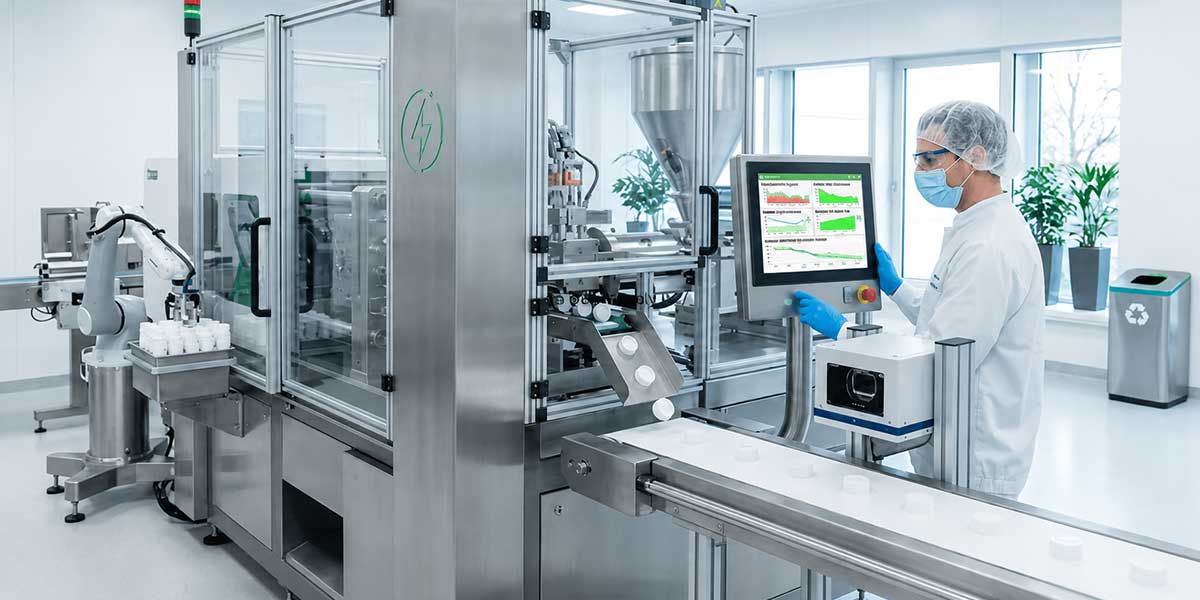
Because JSD Cap is produced through a single, efficient, and fully controlled co-injection process, it eliminates the need for thermoset rubber component manufacturing entirely — removing one of the most environmentally damaging steps in traditional closure production.
Independent lifecycle assessments confirm a meaningfully lower carbon footprint per unit compared to conventional combination caps. Beyond carbon impact, the co-injection structure also enables superior gas barrier properties, reducing oxygen and moisture ingress to protect drug stability over the full product shelf life. Less energy consumption, less waste, and a dramatically lower environmental burden, all without sacrificing performance or safety.
The Bottom Line
The parenteral packaging industry has long accepted the trade-offs inherent in traditional combination caps: variability from multi-step manufacturing, chemical residues from thermoset rubber processing, and an environmental cost that has rarely been scrutinized. JSD Cap overcomes all three challenges.
Co-injection molding is more than an incremental manufacturing improvement—it redefines what a parenteral closure should be. Polymer co-injection caps like JSD Cap integrate materials into a single, optimized structure, enabling cleaner production, enhancing drug compatibility, and meeting the rigorous demands of modern pharmaceutical manufacturing.
For formulators and packaging engineers evaluating elastomeric closure systems, JSD Cap represents a new standard in performance, reliability, and design. It doesn’t matter whether you’re currently using a rubber combination cap, our specialists can walk you through a side-by-side performance comparison.
