

Pharmaceutical Closure Design Begins with Drug Quality
Pharmaceutical packaging is far more than a container or closure. As a component of the drug product system, pharmaceutical packaging materials play a critical role in maintaining drug quality, safety, stability, and usability throughout storage, transportation, and administration.
To meet the demands of pharmaceutical applications, packaging materials must deliver four essential properties: protection, safety, compatibility, and functionality. Achieving these requirements calls for a systematic research and development (R&D) process that integrates material science, product design, functional validation testing, mold engineering, production line development, and regulatory compliance.
At JSD Pharma, pharmaceutical closure technology is developed with a forward-looking approach. Rather than responding solely to existing market requirements, JSD invests in the underlying materials, engineering capabilities, and validation processes needed to address the evolving demands of pharmaceutical manufacturers.
JSD’s co-injection-molded TPE Euro Caps exemplify this R&D-driven approach, combining elastomer material development with precision closure engineering to support the demanding requirements of pharmaceutical packaging.
1. Material Science and Formulation Development

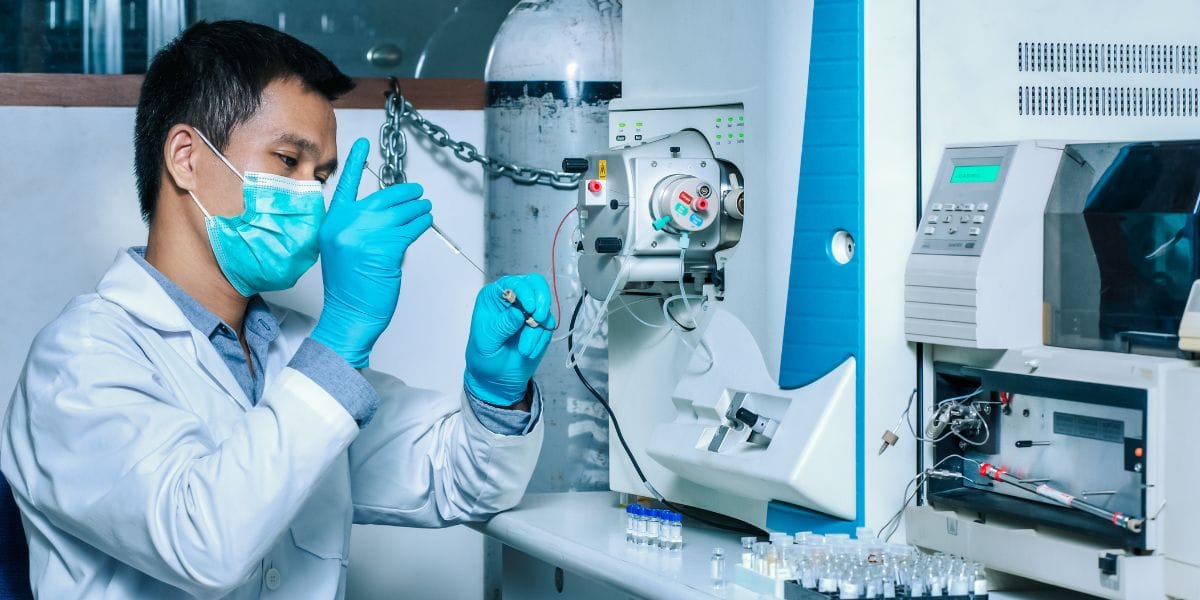
Material development is the foundation of pharmaceutical packaging innovation. For co-injection-molded TPE Euro Caps, the performance of the thermoplastic elastomer (TPE) directly influences sealing performance, mechanical durability, puncture behavior, and compatibility with pharmaceutical applications.
JSD’s material development process considers a range of physical and mechanical properties, including hardness, melt flow rate, specific gravity, tensile strength, tensile modulus, elongation at break, tear strength, and elastomer compression set. Barrier properties may also be evaluated according to the intended application and the protection required by the drug product.
These characteristics must be assessed together rather than in isolation. For example, a material must provide sufficient elasticity and resilience to support effective sealing while maintaining appropriate mechanical strength during manufacturing, transportation, and repeated needle access where applicable.
Chemical characterization and biological safety evaluation are equally important. Depending on the intended application and applicable regulatory requirements, testing may include cytotoxicity, sensitization, irritation, pyrogenicity, and bacterial endotoxins. Chemical testing against relevant pharmacopoeial requirements, including applicable provisions of the United States Pharmacopeia (USP) and European Pharmacopoeia (Ph. Eur.), helps evaluate whether an elastomeric closure is suitable for its intended pharmaceutical use.
For elastomeric components intended to meet specific pharmacopoeial classifications, the applicable requirements must be identified and verified through the appropriate test methods. This provides a scientific basis for evaluating material suitability before the closure progresses to further development and validation.
2. Extractables, Leachables, and Drug Compatibility
A pharmaceutical packaging material must not only perform mechanically; it must also be compatible with the drug product it contacts. Extractables and leachables studies are therefore important elements of packaging development and risk assessment.
Extractables studies investigate chemical substances that may be released from a packaging material under deliberately exaggerated laboratory conditions. Depending on the material and its intended use, these studies may employ suitable solvents, elevated temperatures, and other controlled extraction conditions. Analytical techniques are then used to identify and quantify relevant chemical compounds, helping establish a profile of potential substances of concern.
Leachables studies focus on substances that migrate from the packaging material into the actual drug product, or an appropriate representative medium, under relevant storage and use conditions. These studies help determine which compounds may be present in the product over time and at what concentrations.
The resulting data support toxicological evaluation and exposure assessment, including the estimation of patient exposure under the intended conditions of use. The objective is to determine whether identified substances present an acceptable risk and whether additional controls, material changes, or further studies are necessary.
For JSD, this compatibility-focused approach is an important part of developing pharmaceutical closures for demanding applications. Material selection and formulation decisions must be considered alongside the drug product, storage conditions, intended use, and applicable regulatory expectations.
3. Functional Validation Testing of TPE Euro Caps
A pharmaceutical closure must demonstrate that it performs reliably in practical applications, not merely that it meets basic material specifications.
For JSD’s co-injection-molded TPE Euro Caps, two key functional characteristics are resistance to particle shedding during needle puncture and resistance to leakage following needle withdrawal. These properties are particularly relevant to pharmaceutical containers that require needle access during manufacturing, preparation, or administration.
Puncture testing can evaluate the closure’s behavior when penetrated by a needle, including whether visible fragments or particles are generated. Leakage testing assesses the closure’s ability to maintain a seal after needle withdrawal under defined test conditions. Depending on the intended application, testing may also examine repeated punctures and performance under relevant pressure conditions.
Laboratory testing is only one part of the validation process. Simulated manufacturing, transportation, and use conditions can provide additional insight into how a closure performs throughout its lifecycle. The specific test protocols and acceptance criteria should reflect the container design, drug product requirements, manufacturing process, and intended use.
By incorporating functional validation testing into product development, JSD aims to address practical packaging challenges early in the engineering process rather than relying solely on material properties or nominal dimensions.
4. Protective Performance and Container Closure Integrity
The primary purpose of pharmaceutical packaging is to protect the drug product. The required level of protection varies according to the formulation, storage environment, and sensitivity of the pharmaceutical product.
Barrier performance must therefore be evaluated against application-specific requirements. For products that require a controlled nitrogen atmosphere, for example, nitrogen transmission testing may help assess whether the packaging system can maintain the required conditions. For light-sensitive formulations, ultraviolet light transmission testing can help determine whether the packaging provides the necessary level of light protection.
Container closure integrity is another critical consideration, particularly for sterile pharmaceutical products. A closure system must maintain its sealing performance and help prevent the ingress of microorganisms or other contaminants throughout the intended storage period.
Depending on the product and applicable validation strategy, integrity assessment may involve dye ingress, microbial challenge testing, or other suitable container closure integrity test methods. The selection of an appropriate method depends on the packaging configuration, the sensitivity required, and the ability of the method to detect relevant defects.
For JSD, these evaluations form part of a broader approach to closure development: defining the protective requirements of the application, selecting suitable materials and structures, and verifying performance through appropriate tensile strength testing.
5. Product Design, Mold Engineering, and Production Line Development
Material performance alone cannot guarantee the success of a pharmaceutical closure. Product geometry, molding precision, process control, and manufacturing equipment all influence the consistency and reliability of the finished component.
JSD integrates product structure development with mold engineering and manufacturing considerations. This approach allows closure geometry and material behavior to be evaluated together, with attention to sealing interfaces, puncture zones, dimensional accuracy, and production feasibility.
Mold development is particularly important for co-injection-molded closures, where the interaction between different materials and the precision of the mold can affect the final product’s performance. Design reviews and sample evaluations help identify potential issues before production scale-up.
Production line engineering extends this development process from the individual closure to the manufacturing system. Equipment configuration, process parameters, inspection requirements, and production workflows must be considered together to support repeatable output and consistent product quality.
By connecting material R&D, product design, mold manufacturing, and production engineering, JSD can approach pharmaceutical closure development as an integrated process rather than a series of disconnected activities.
6. Regulatory Compliance as Part of the Development Process

Regulatory considerations should be incorporated from the earliest stages of pharmaceutical packaging development. Material selection, chemical characterization, biological safety, functional performance, and container closure integrity all contribute to the evidence needed to demonstrate suitability for a specific application.
Applicable requirements may vary according to the target market, product classification, intended drug contact, and regulatory pathway. Relevant USP and Ph. Eur. provisions, together with applicable national requirements and customer specifications, should therefore be identified at the beginning of a development project.
A structured development process also helps organize technical documentation, test results, material information, and validation records. This information can support customers as they evaluate packaging components within their own pharmaceutical development, quality, and regulatory systems.
Importantly, compliance cannot be established through a single test or a general claim of suitability. It depends on the specific product, its intended use, the applicable requirements, and the supporting evidence generated through appropriate evaluation.
JSD’s pharmaceutical R&D process places regulatory considerations alongside material and engineering decisions, helping ensure that product development remains aligned with the requirements of pharmaceutical applications.
Developing Pharmaceutical Closure Technology for Tomorrow’s Needs
The future of pharmaceutical packaging depends on more than incremental product improvements. It requires a coordinated understanding of polymer science, drug compatibility, closure design, manufacturing technology, functional performance, and regulatory expectations.
Through its integrated R&D approach, JSD develops pharmaceutical closure technology with these interconnected requirements in mind. From TPE formulation and extractables and leachables assessment to puncture performance, sealing integrity, mold engineering, and production line development, each stage contributes to the evaluation and refinement of the final packaging solution.
For pharmaceutical seal manufacturers, this approach provides a foundation for working with a packaging partner that understands the relationship between material performance, manufacturing requirements, and drug product protection.
JSD Pharma continues to advance pharmaceutical packaging through material innovation, precision engineering, and application-focused development—working to address not only today’s packaging challenges, but also the evolving needs of the pharmaceutical industry.
