
What Is Medical-Grade TPE? Standards, Properties & Pharmaceutical Packaging Applications
The pharmaceutical packaging industry is undergoing a quiet but significant transformation. For decades, rubber has been the go-to material for parenteral drug packaging components — stoppers, seals, and closures used across both small-volume parenterals (SVP) and large-volume parenterals (LVP) such as infusion solutions. But rubber comes with real trade-offs: complex processing, a long list of chemical additives, and a meaningful risk of introducing unintended substances into drug products. Some of those substances can pose genuine health risks to patients and healthcare workers alike. On top of that, rubber manufacturing generates substantial industrial waste — a growing concern as the industry pushes toward greater sustainability and cost efficiency.
That’s why medical-grade TPE material, engineered specifically for pharmaceutical applications, is increasingly stepping in to address these shortcomings. This post breaks down what medical-grade TPE is, the performance standards it must meet, and why it’s becoming the preferred material for parenteral pharmaceutical packaging.
What Makes TPE “Medical-Grade”?

Not all TPE is created equal. Understanding TPE vs. rubber in pharmaceutical packaging begins with how each material is processed: unlike conventional rubber, medical-grade TPE is a specially formulated class of thermoplastic elastomer engineered for pharmaceutical and clinical use. It requires no auxiliary chemical additives, meaning the manufacturing process is simpler, more controlled, and far less likely to introduce contaminants. Unlike conventional rubber, medical-grade TPE is processed without auxiliary chemical additives, meaning the manufacturing process itself is simpler and more controlled, and the risk of introducing contaminants or unintentionally added substances (sometimes called NIAS) is dramatically lower.
The material’s physical structure — alternating hard and soft segments bonded at the molecular level — gives it the flexibility of rubber with the processability of plastic. That unique architecture also enables extremely precise manufacturing tolerances, making it well-suited for components that must perform consistently across millions of units and throughout a product’s full shelf life.
To learn more about how Medical TPE can transform your parenteral packaging line, contact our team for a technical consultation.
JSD 131 and JSD Cap: Medical-Grade TPE in Practice
JSD 131 is JSD Pharma’s proprietary medical-grade TPE elastomer, purpose-built for pharmaceutical packaging applications. JSD Cap — our signature TPE Euro Cap — is manufactured from JSD 131 and represents the standard for what a high-performance parenteral packaging closure should deliver for LVP drug products.
Here’s how JSD Cap performs against the industry’s most demanding benchmarks — a direct reflection of the medical-grade elastomer properties built into JSD 131:
1. Full Regulatory Compliance
A qualifying medical-grade TPE must simultaneously meet ICH (International Council for Harmonization) guidelines, relevant ISO series standards, and country-specific GMP (Good Manufacturing Practice) requirements. This means documented test reports, quality management systems that cover the entire product shelf life, and official approvals from the relevant regulatory bodies.
JSD Cap passes the rigorous physicochemical testing requirements specified under USP 382 — one of the most stringent standards governing elastomeric closures for parenteral preparations — with full supporting documentation.
2. Superior Self-Sealing Performance
Self-sealing is a non-negotiable property for parenteral drug closures, whether on a vial or an infusion bag port. After a needle punctures the closure, the material must return to an airtight seal to protect the remaining drug product from contamination.
JSD Cap significantly outperforms the standard. Using a 0.8 mm puncture needle, it maintains excellent self-sealing performance even after more than 20 punctures, which is more than double the 10-puncture benchmark set by ISO standards.
3. Near-Zero Particle Shedding
Particle shedding is a serious patient safety issue where fragments of the closure break off during needle puncture and enter the drug product. Particulate matter in a parenteral solution can cause granulomas and vascular injury when it enters the bloodstream.
Because of JSD 131’s bonded hard-soft segment molecular structure, JSD Cap produces zero particles larger than 50 microns per puncture, which the ISO standard permits up to five such particles. In parenteral drug delivery, that difference is clinically significant.
4. Low Puncture Force
In emergency and critical care settings, healthcare providers need rapid, reliable access to parenteral medications. JSD Cap is engineered to require minimal insertion force, enabling fast, smooth needle penetration without compromising the integrity of the closure or the drug product.
5. Multiple Sterilization Compatibility
Parenteral packaging must be sterilizable using a variety of methods depending on the drug product and manufacturing environment. JSD Cap is compatible with:
- Moist heat (autoclave/steam sterilization)
- Ethylene oxide (ETO) sterilization
- Radiation sterilization (gamma or e-beam)
Beyond sterilization during manufacturing, JSD Cap also withstands alcohol-based disinfection in clinical settings — an important practical requirement for point-of-care use across both hospital wards and intensive care environments.
Why Medical-Grade TPE Is Gaining Ground in Pharma Packaging
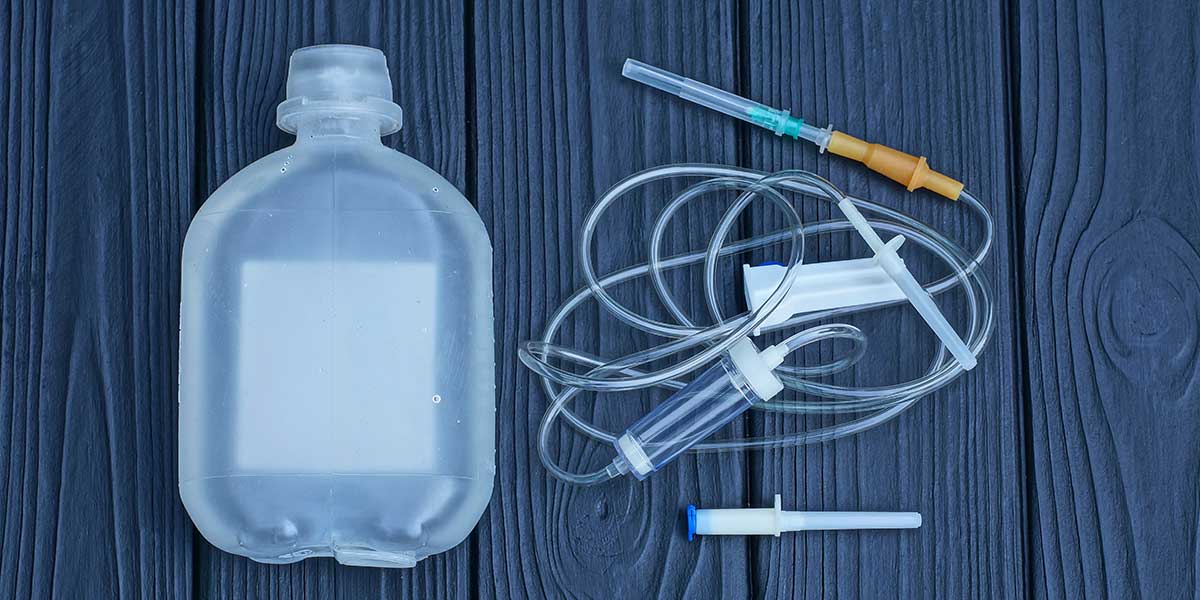
The shift toward medical-grade TPE is driven by a combination of factors: a cleaner, more controlled manufacturing process that significantly reduces the risk of contamination; demonstrably better puncture and resealability performance; full regulatory compliance across ICH, ISO, and USP frameworks; compatibility with all major sterilization methods; and a production process that generates far less waste than conventional rubber, aligning with the industry’s growing emphasis on sustainability and cost efficiency.
For pharmaceutical manufacturers evaluating parenteral packaging materials, JSD Cap is engineered to meet the full scope of regulatory and clinical requirements in a single, validated closure solution.
As the industry moves toward sustainable pharmaceutical packaging, JSD Cap’s low-waste production process and reduced environmental burden make it an increasingly compelling choice for manufacturers under pressure to meet both clinical and ESG standards.
Explore our full range of pharmaceutical packaging materials — from TPE Euro Caps to validated closure systems designed for SVP and LVP applications.
