

Why Closure Performance on BFS Lines Cannot Be Validated by Laboratory Testing Alone
For blow-fill-seal (BFS) infusion containers, the performance of the closure system is critical to maintaining sterility, product integrity, and patient safety. Advanced polymer co-injection Euro Caps such as the JSD Cap are validated through far more than laboratory testing. Their performance is confirmed through scientific research, commercial-scale manufacturing validation, simulated clinical studies, and real clinical use.
This comprehensive verification process demonstrates that the closure system consistently maintains drug quality, safety, and efficacy under its intended conditions of use. More importantly, it ensures that every stage of the product lifecycle, from research and development to commercial production, complies with regulatory requirements and modern risk management principles.
Why Laboratory Testing Has Its Limits

Laboratory testing is an essential part of pharmaceutical packaging development, but it represents only one stage of the validation process.
Testing is performed under carefully controlled conditions that focus primarily on the physical and chemical performance of the packaging component. Individual variables or a limited number of extreme conditions can be evaluated with high precision, but laboratory environments cannot reproduce the complex and continuously changing conditions found on commercial BFS production lines.
Another limitation is sample size. Laboratory evaluations typically examine only dozens or hundreds of samples, which cannot provide statistically representative data for large-scale manufacturing. In addition, laboratory testing focuses on the packaging component itself and does not account for the interactions between equipment, materials, operators, and manufacturing processes that occur during routine production.
Commercial BFS Manufacturing Introduces Additional Variables
Unlike laboratory environments, BFS manufacturing operates as a continuous, high-speed production process where numerous variables can influence closure performance.
Even small fluctuations in production equipment may affect sealing consistency. Wear of filling heads, temperature control drift, or changes in compressed air pressure can create measurable differences in sealing performance across production batches.
Raw material variability is another important consideration. Although materials may come from the same supplier, small differences between production lots in properties such as elastic modulus or tensile strength can become amplified during high-speed manufacturing.
Environmental conditions also contribute to manufacturing variability. Changes in cleanroom temperature, humidity, and cleanliness may influence molding precision and sealing performance.
Human factors should not be overlooked. Operator practices, equipment maintenance schedules, and routine process adjustments all contribute to long-term manufacturing consistency and cannot be evaluated through laboratory testing alone.
As a precision-focused LVP packaging manufacturer, JSD designs every aspect of the JSD Cap production process to minimise variability at scale, from material selection and mold engineering through to cleanroom manufacturing controls and batch-level quality assurance. Contact JSD today to learn how our manufacturing standards translate into more consistent closure performance across your commercial BFS production runs.
Regulatory Requirements Demand Full GMP Process Validation
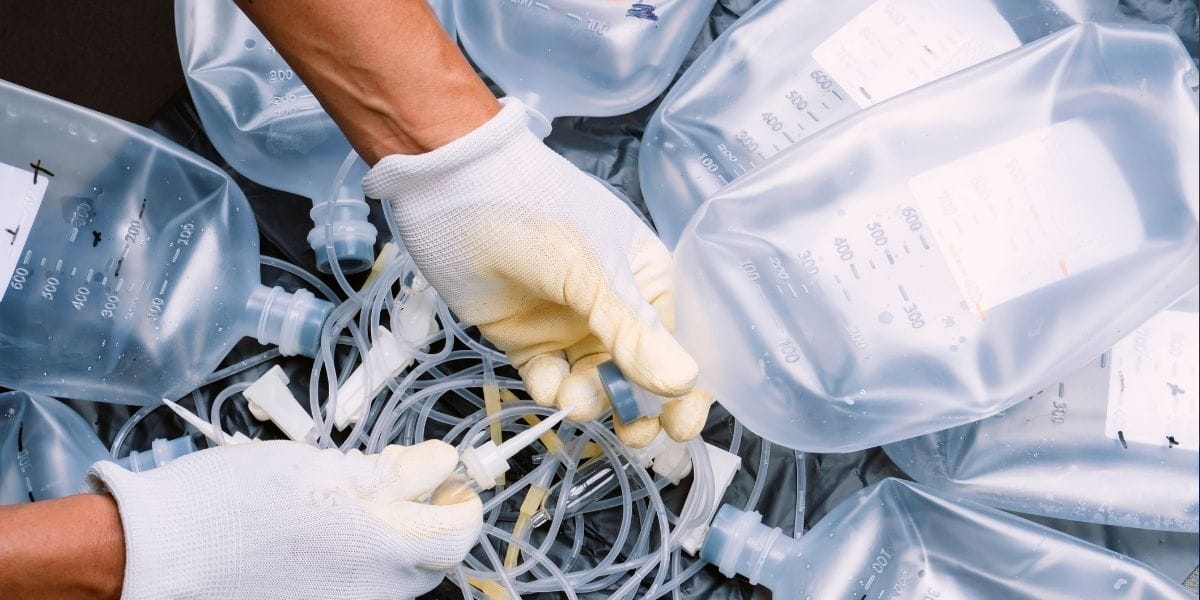
Because infusion closures are pharmaceutical packaging components that come into direct contact with sterile drug products, regulatory agencies require comprehensive validation beyond laboratory performance testing.
Good Manufacturing Practice (GMP) regulations require critical manufacturing processes to undergo process validation that demonstrates consistent performance during commercial production. Laboratory testing alone cannot provide evidence that a manufacturing process will reliably produce compliant products over extended production runs.
Comprehensive production and packaging validation significantly reduces the risk of systemic failures that could compromise container closure integrity. If sealing performance is inadequate, contamination of sterile infusion products may occur, potentially leading to serious patient safety concerns.
Essential Validation Studies Before Commercial Use
Before a pharmaceutical packaging component that directly contacts a drug product is approved for commercial use, manufacturers are expected to complete several key validation studies.
Compatibility Studies
Compatibility studies evaluate interactions between the packaging material and the pharmaceutical product, including migration, adsorption, and possible chemical reactions.
These studies demonstrate that the packaging material does not negatively affect the quality, safety, or efficacy of the drug throughout its intended shelf life.
Regulatory submissions should include compatibility data confirming compliance with applicable pharmacopoeial and regulatory requirements.
Safety Studies
Safety evaluations assess the potential presence of harmful substances such as heavy metals, residual solvents, microbial contamination, and other extractable or leachable compounds.
These studies verify that the packaging material meets regulatory safety requirements before commercial use.
Stability Studies
Stability studies determine how the packaging performs under different storage conditions over time.
Manufacturers evaluate physical stability, chemical stability, and microbiological stability to establish appropriate shelf life and storage conditions while demonstrating continued regulatory compliance.
Functional Performance Studies
Functional pharmaceutical packaging validation confirms that the closure system performs as intended throughout its use.
Typical evaluations include sealing integrity, particle generation during needle puncture, and leakage after needle withdrawal. These tests verify that the closure maintains reliable performance during clinical use and supports the safe administration of infusion products.
Depyrogenation Validation
For sterile injectable pharmaceutical products, packaging components must also undergo depyrogenation validation.
These studies demonstrate that the manufacturing process effectively removes pyrogens and supports the microbiological safety of the finished pharmaceutical product.
Building Confidence Through End-to-End Validation
Laboratory testing remains an essential foundation for pharmaceutical packaging development, but it represents only one part of a comprehensive validation strategy.
For polymer co-injection closures such as the JSD Cap, confidence is established through a complete verification program that combines laboratory evaluation, process validation, commercial production studies, simulated clinical testing, and real-world clinical use.
This end-to-end approach ensures consistent manufacturing performance, regulatory compliance, and long-term protection of drug quality while providing healthcare professionals and patients with reliable and safe infusion packaging.
For pharmaceutical manufacturers evaluating alternatives to conventional sealing solutions such as combination caps and medical rubber stoppers, JSD Cap offers a clinically validated, silicone-free, and particle-reducing closure solution backed by a complete documentation and validation support package. Contact JSD today to request technical information or speak with our team about integrating JSD Cap into your infusion packaging line.
