

A Euro Cap used for large-volume parenteral (LVP) polymer containers generally consists of three components: the puncture-site protector, the rigid plastic cap body, and the elastomeric sealing element. All three components must be manufactured from pharmaceutical-grade materials that meet regulatory requirements for biocompatibility and safety. Once the tamper-evident tear-off ring or aluminum foil seal is opened, it cannot be restored, providing visible evidence of tampering and helping prevent unauthorized access.
Three Performance Requirements
The primary performance requirements for Euro Caps used in LVP packaging are container closure integrity, clinical usability, and sterilization resistance.
Container closure integrity depends on the sealing performance of the cap itself, the dimensional compatibility between the cap and the container, and reliable welding or assembly with the bottle or bag.
Clinical usability requires that healthcare professionals can easily remove the protective cover and puncture the sealing element during drug preparation without liquid leakage or particle generation. In particular, the elastomeric sealing element must provide excellent self-sealing performance after needle puncture.
Sterilization resistance depends largely on selecting an appropriate rigid plastic material, such as HDPE, LDPE, or PP, according to the sterilization method used for the pharmaceutical product.
Whether using a conventional Euro Cap or a new-generation design such as the JSD Cap®, both the rigid plastic body and the puncturable elastomeric sealing element must be manufactured with high dimensional precision and excellent compatibility. Just as importantly, a reliable blow-fill seal manufacturer ensures that sufficient bonding strength exists between the two components to maintain container closure integrity throughout manufacturing, sterilization, transportation, storage, and clinical use, even when subjected to external mechanical forces.
In conventional Euro Caps, the rigid plastic cap and thermoset rubber sealing element are assembled mechanically. By comparison, new-generation TPE co-injection Euro Caps are manufactured using a high-precision injection molding process under high temperature and pressure, allowing the elastomer to bond directly to the rigid plastic substrate during molding. This overmolded construction provides significantly higher bonding strength than the traditional mechanical assembly. Despite these manufacturing differences, both conventional Euro Caps and TPE co-injection Euro Caps rely on the same fundamental operating principles.
The Rigid Plastic Cap
The rigid cap serves as the structural framework of the Euro Cap.
Typically injection molded from polypropylene (PP), high-density polyethylene (HDPE), or low-density polyethylene (LDPE), it provides the mechanical strength and rigidity required to withstand handling, sterilization, transportation, and clinical use. The cap also incorporates features that securely retain the elastomeric sealing element while ensuring proper assembly. In addition, its container interface is designed to match the infusion bottle or IV bag, enabling reliable welding or attachment to the container.
The Elastomeric Sealing Element

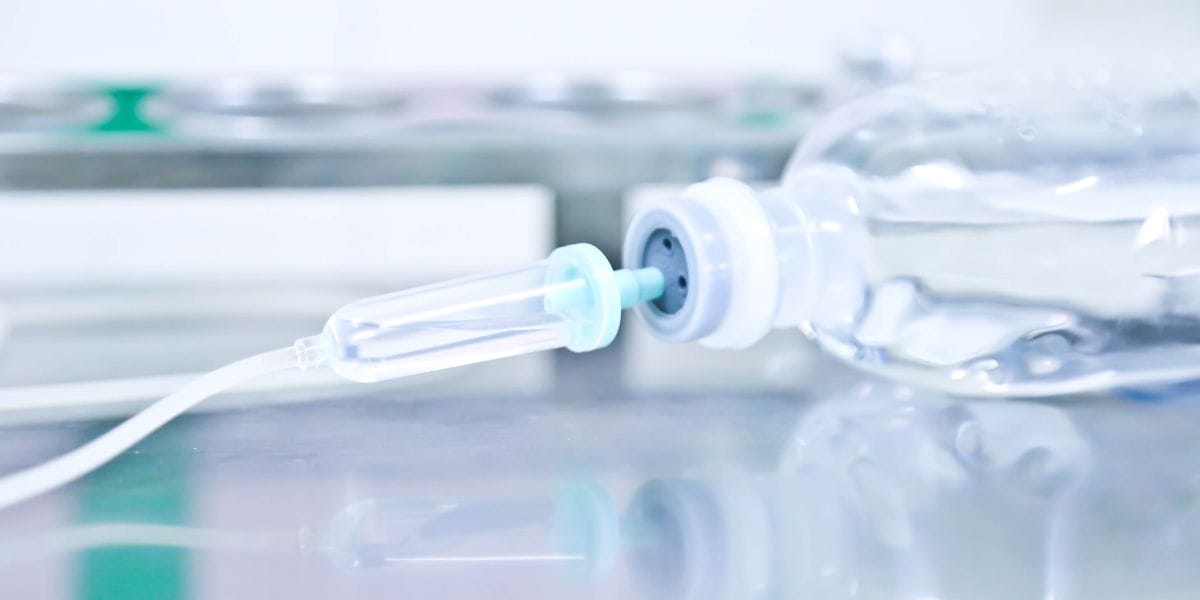
The sealing element is typically manufactured from either a thermoplastic elastomer (TPE) or a conventional thermoset rubber.
Usually formed as a circular sealing disc, it contains a designated puncture zone with grooves or other weakened features that facilitate needle insertion while allowing the material to reseal after withdrawal. Around its perimeter, the sealing lip deforms against the container interface to create a reliable liquid-tight seal. In conventional Euro Caps, the elastomeric component also incorporates positioning bosses that engage with corresponding features in the plastic cap to ensure accurate assembly.
The Puncture-Site Protector
The puncture-site protector is typically provided as either a welded aluminum foil seal or a tamper-evident tear-off ring.
Its primary function is to protect the puncture area from particulate contamination and foreign matter during transportation and storage. It also enables convenient opening by healthcare professionals immediately before use. Once removed, the protector serves as tamper-evident evidence, clearly indicating that the package has been opened.
Conclusion
Although the rigid plastic cap and the elastomeric sealing element perform different functions, they operate as an integrated system to ensure the overall performance of a Euro Cap. The rigid cap provides structural strength, dimensional stability, and secure attachment to the container, while the elastomeric sealing element delivers reliable sealing before and after needle puncture. Together, they ensure container closure integrity throughout manufacturing, sterilization, transportation, storage, and clinical use.
Whether employing a conventional mechanically assembled design or a modern TPE co-injection molding process such as the one used for Polymer JSD Caps® (Euro Caps), the fundamental operating principle remains the same: the rigid and elastomeric components must be precisely manufactured, accurately matched, and securely bonded to provide safe, reliable, and compliant pharmaceutical packaging for large-volume parenteral products.
