

Silicone oil has been an essential material in pharmaceutical manufacturing for decades. Primarily composed of polydimethylsiloxane (PDMS), silicone oil has played a critical role in the production and assembly of IV infusion packaging, particularly in combination caps and pharmaceutical closures. Throughout the 20th century, PDMS became the industry standard for multiple medical applications because of its excellent lubricating and release properties.
For manufacturers of large-volume parenteral (LVP) packaging, silicone oil has traditionally been indispensable. It is widely used to:
- Facilitate the demolding of rubber sealing components during manufacturing.
- Prevent rubber components from sticking together during packaging, storage, and transportation.
- Lubricate the assembly of combination caps for IV infusion containers.
- Meet manufacturing requirements recognized by major pharmacopoeias worldwide.
Despite its widespread use, growing scientific evidence has revealed that silicone oil presents significant challenges for modern pharmaceutical packaging, especially as biologics and high-value injectable therapies become increasingly common.
Why Silicone Oil Is Becoming a Major Concern
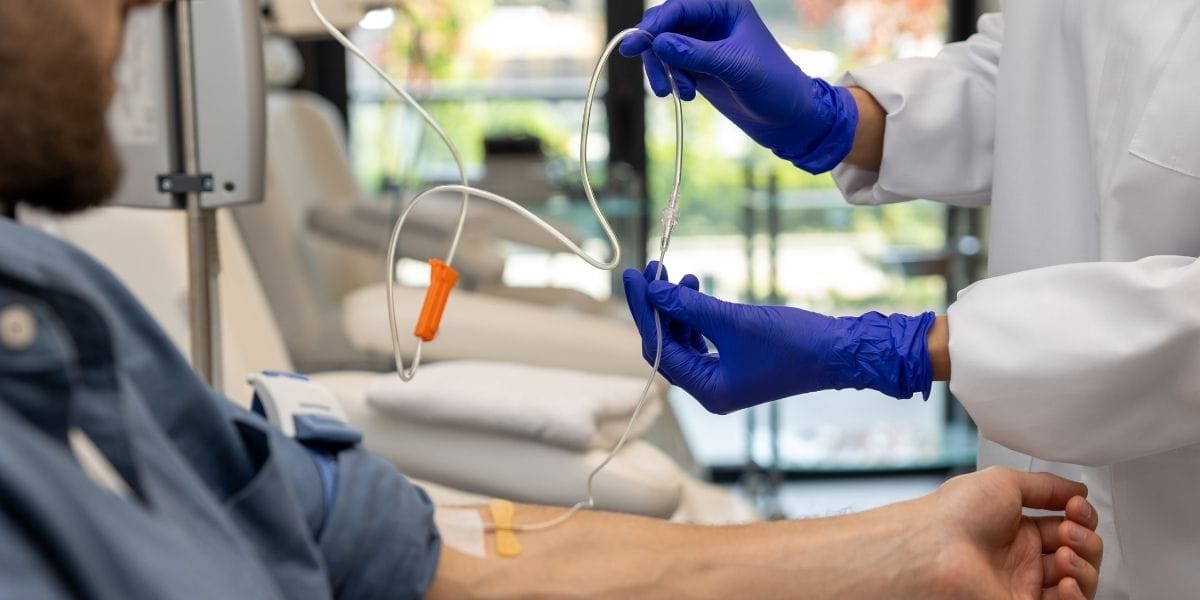
During the entire shelf life of an injectable product, the drug remains in contact with packaging components that may contain silicone oil. Over time, silicone oil can migrate or generate insoluble particulate matter, creating pharmaceutical contamination risks that may ultimately enter the patient’s bloodstream during administration.
Major pharmacopoeias, including the United States Pharmacopoeia (USP), European Pharmacopoeia (EP), Japanese Pharmacopoeia (JP), and Chinese Pharmacopoeia (ChP), impose strict limits on particulate contamination in injectable drugs because patient safety depends on maintaining exceptionally clean drug products.
The challenge is even greater for protein-based biologics, vaccines, and other sensitive formulations. Numerous studies have shown that contact with silicone oil droplets can induce issues such as protein aggregation, particle formation, protein precipitation, reduced biological activity, and loss of therapeutic efficacy.
These issues have made silicone oil one of the pharmaceutical packaging industry’s most closely watched contamination sources.
Potential Health Risks Associated with Silicone Oil

Medical research continues to investigate the biological effects of a silicone oil injectable drug and its microdroplets. Published studies have associated silicone oil exposure with several potential risks, including:
- Immune system activation and inflammatory responses
- Chronic granulomatous inflammation
- Localized swelling, pain, and tissue hardening
- Increased susceptibility to infection due to prolonged immune stimulation
- Skin and vascular complications
- Long-term tissue irritation
- Potential cancer risks associated with chronic tissue irritation and prolonged exposure to impurities present in low-quality silicone oils
Because injectable therapies are administered directly into the body, pharmaceutical manufacturers are increasingly seeking packaging technologies that eliminate unnecessary sources of contamination rather than simply controlling them.
JSD Cap®: A Silicone Oil-Free Solution for IV Packaging
JSD Pharma has developed an innovative manufacturing technology that completely eliminates the need for silicone oil during the production of JSD Cap (TPE Euro Cap).
The solution combines the proprietary JSD131 high-resilience thermoplastic elastomer (TPE) with advanced precision co-injection molding technology, allowing both the rigid and soft sealing components of the Euro Cap to be molded directly in Grade C—and even Grade A—cleanroom environments, without the use of any silicone oil.
Unlike conventional rubber gasket manufacturing, no silicone oil is required for:
- Mold release
- Component lubrication
- Assembly
- Transportation anti-stick treatment
This breakthrough effectively eliminates silicone oil pharmaceutical contamination from the IV infusion packaging process.
For pharmaceutical manufacturers seeking cleaner, more controlled closure solutions, JSD stands apart as a pharmaceutical packaging supplier that engineers contamination risk out of the process rather than managing it after the fact. Contact us today to find out how JSD Cap technology can improve the purity and performance of your IV infusion packaging.
Advanced Manufacturing Technology
The silicone oil-free production process incorporates multiple precision-controlled manufacturing technologies designed for pharmaceutical applications, including:
- Polymer material drying and conditioning
- Independent dual-material feeding systems
- High-precision gravimetric dosing with accuracy up to ±0.1%
- Precision two-color co-injection molding
- High-performance hot runner mold technology
- Fully automated intelligent conveying systems
- Automatic transfer to film-laminating or pull-ring welding production lines
- 100% automated vision inspection
- Automated counting and packaging
JSD Pharma also utilizes specially engineered high-precision mold steel together with AI-assisted mold maintenance and synchronized mold design optimization. This integrated manufacturing approach helps ensure exceptional dimensional consistency, uniform surface appearance, stable sealing performance, and near-zero manufacturing defects suitable for pharmaceutical packaging applications.
The Future of Clean Pharmaceutical Packaging
As injectable drugs become increasingly sophisticated, packaging materials must evolve to meet higher standards for cleanliness, compatibility, and patient safety. Eliminating silicone oil from IV packaging represents an important step toward reducing contamination risks while improving the performance of pharmaceutical closures.
Through proprietary material innovation and precision co-injection molding, JSD Cap offers manufacturers a modern alternative that supports cleaner production processes without relying on traditional silicone oil lubrication—helping advance the next generation of IV infusion packaging systems.
