

What Are Particulates in IV Infusions?
Particulates are insoluble, non-metabolizable foreign particles suspended in infusion solutions. Most particles measure between 1 and 15 μm in diameter, although some may range from 50 to 300 μm.
Numerous factors contribute to particulate contamination throughout the IV infusion product lifecycle. According to published literature, even when large volume parenteral (LVP) products are manufactured in GMP-compliant facilities, a significant proportion of particulate contamination occurs during clinical administration. Repeated puncturing of conventional rubber infusion caps can generate rubber fragments, while manufacturing-related particulate contamination and silicone oil droplets can further increase the total particle burden.
Studies have reported that these packaging-related factors account for approximately 57% to 73% of particulate contamination found in IV infusion systems, making packaging components one of the primary sources of contamination.
Clinical Risks Associated with Particulates
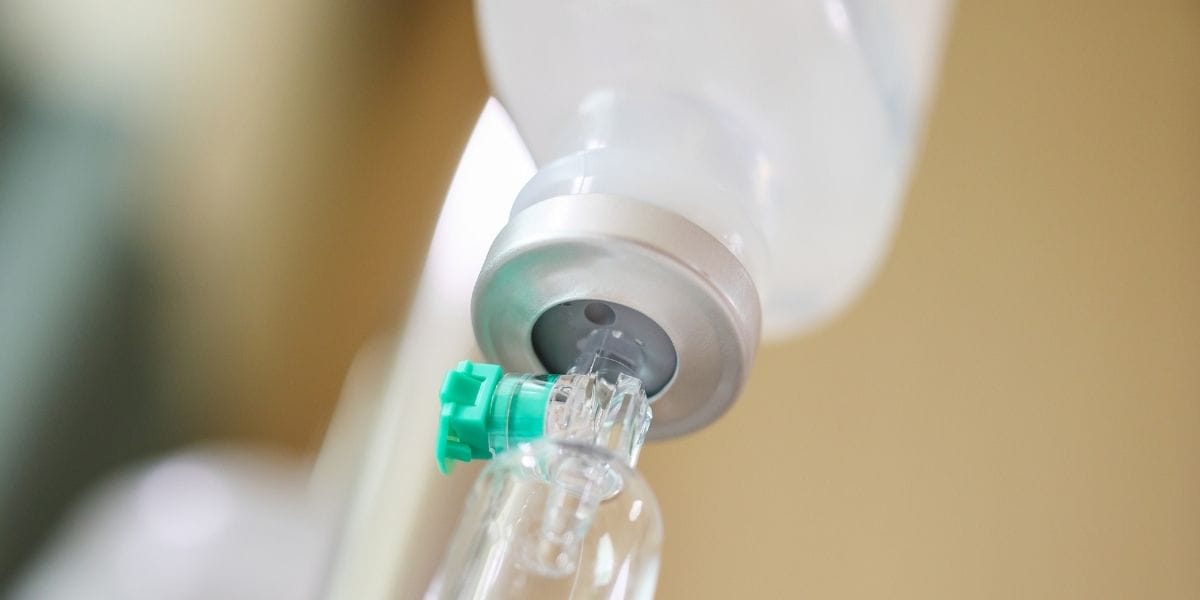
Although many particles are subvisible and cannot be detected by the naked eye, they may still present potential risks to patients.
Damage to the Vascular System
Particles larger than the diameter of capillaries can become trapped within the microcirculation. Adult capillaries typically measure 6 to 8 μm in diameter, while pediatric capillaries are even smaller at approximately 3 to 5 μm.
Entrapped particles may reduce local blood flow, resulting in tissue ischemia, hypoxia, and, in severe cases, tissue necrosis.
Particulates may also injure vascular endothelial cells and promote platelet aggregation. Clinical observations have suggested that particulate contamination may contribute to infusion-related phlebitis in a substantial proportion of patients.
Organ Function Impairment
Foreign particles may stimulate chronic inflammatory responses, leading to granuloma formation in organs including the lungs, liver, kidneys, and brain. Extensive granuloma formation may interfere with normal organ function.
Particles smaller than 10 μm may penetrate deep into the lungs and reach the alveoli. Long-term accumulation has been associated with pulmonary fibrosis, potentially reducing the efficiency of gas exchange.
Systemic Adverse Reactions
Certain particles, including drug crystals or polymer fragments, may trigger allergic responses after interacting with tissue proteins. Clinical symptoms may range from skin irritation and itching to severe anaphylactic reactions.
Particles contaminated with pyrogens may also induce fever-like reactions characterized by high fever, chills, nausea, vomiting, and, in severe cases, circulatory shock.
Why Conventional Rubber Infusion Caps Generate Particulates
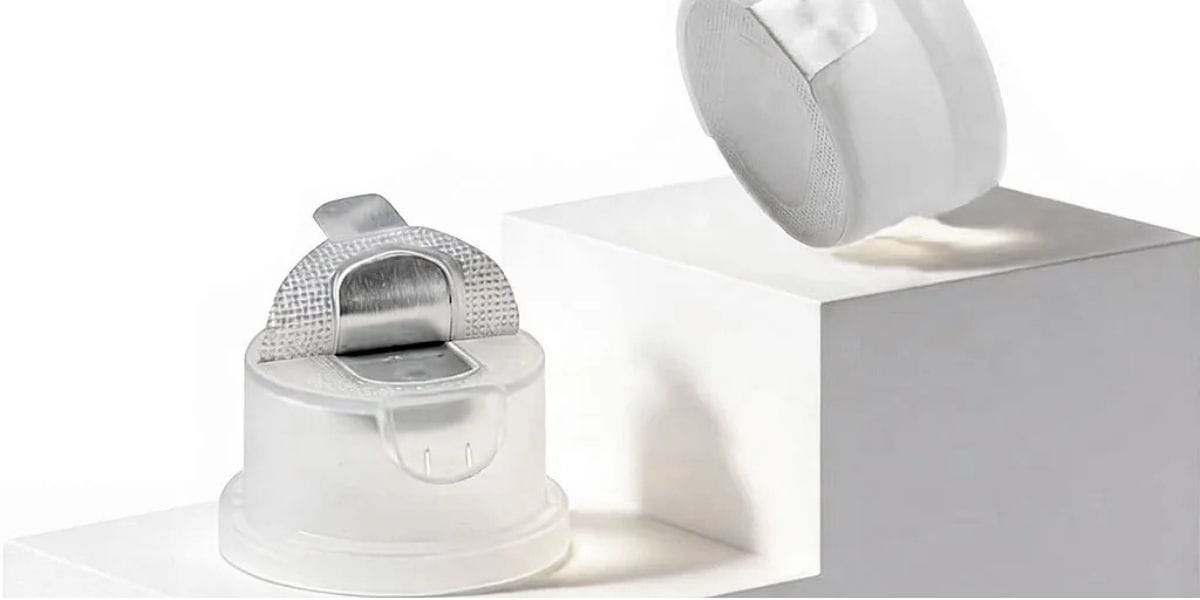
Traditional thermoset rubber combination caps typically contain approximately 40% inorganic fillers. These rubber filler particles improve mechanical properties but exhibit relatively weak bonding with the matrix and are prone to shedding.
During repeated needle puncture, insoluble particles in the infusion solution can separate from the rubber, producing both visible and subvisible particulates.
Research indicates that approximately 95% of puncture-generated particles are subvisible particles, primarily originating from inorganic fillers. These particles typically range from 10 to 25 μm, with an average diameter of approximately 18 μm. Visible particles larger than 150 μm account for less than 5% of the total.
Even when no visible particles are produced, conventional rubber caps may still generate substantial numbers of subvisible particles during clinical use.
Manufacturing Factors That Influence Particle Generation
The manufacturing process of thermoset rubber components has a significant impact on particulate generation:
- Insufficient vulcanization produces a looser rubber structure, increasing subvisible particle generation by approximately two to three times.
- Excessive silicone oil lubrication can introduce additional silicone oil droplets. When silicone oil content exceeds approximately 1.0%, silicone oil-derived subvisible particles become more likely to form.
- Mold corrosion gradually changes the thickness of the puncture area, increasing the generation of visible particles.
- Higher mold surface roughness also contributes to particle formation. When surface roughness exceeds Ra 0.8 μm, the number of subvisible particles may increase by 40% to 60%.
In addition, variations in chamfer geometry around the puncture site can significantly influence particle generation, with poorly controlled designs producing more than twice the number of visible particles during needle insertion.
A Precision Co-Injection Alternative: JSD Cap®
Precision co-injection molded thermoplastic elastomer (TPE) technology offers a fundamentally different approach to IV packaging.
The puncture zone of JSD Cap (TPE Euro Cap) is manufactured using a high-resilience TPE sealing component that contains no inorganic rubber filler particles prone to shedding. As a result, the risk of puncture-generated subvisible particles is significantly reduced.
The cap is produced using high-pressure precision co-injection molding in a clean manufacturing environment. Corrosion-resistant mold steel minimizes mold degradation, allowing consistent surface finish, stable dimensional accuracy, and highly uniform product geometry throughout production.
These manufacturing advantages help reduce both visible and subvisible particulate generation during repeated needle puncture.
Extensive laboratory testing and clinical validation have demonstrated that precision co-injection molded TPE Euro Caps can substantially reduce puncture-related particle shedding, offering an effective solution to one of the long-standing challenges in IV infusion packaging.
JSD’s TPE Euro Caps represent a significant advancement over conventional pharmaceutical stoppers, delivering cleaner puncture performance, tighter dimensional control, and a material composition engineered specifically to meet the demands of modern IV infusion therapy. Contact JSD today to learn how our closure solutions can support your particulate control strategy.
Conclusion
Particulate contamination remains an important patient safety consideration in IV infusion therapy. While pharmaceutical manufacturing has achieved extremely high quality standards, packaging components continue to play a critical role in overall particulate control.
Replacing conventional thermoset rubber combination caps with precision co-injection molded TPE Euro Caps can significantly reduce particle generation by eliminating inorganic fillers, minimizing silicone oil-related contamination, and maintaining consistent manufacturing precision. As the pharmaceutical industry continues to prioritize patient safety and product quality, advanced packaging technologies are becoming an increasingly important part of comprehensive particulate control strategies.
JSD has been developing and manufacturing precision Euro Cap solutions since 1994, combining proprietary elastomer technology with GMP-compliant production to meet the highest global pharmaceutical standards. As a trusted medical packaging manufacturer specializing in large-volume parenteral packaging, JSD works with pharmaceutical companies worldwide to reduce particulate risk at the source. Contact us today to discuss your packaging requirements!
