
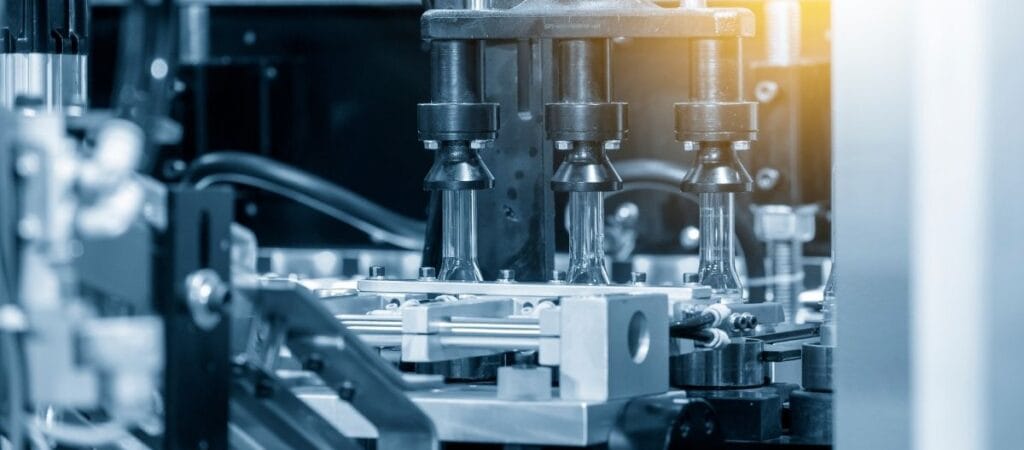
Why the Same BFS Production Line Performs Differently with Different IV Caps
Blow-fill-seal (BFS) aseptic filling technology has become one of the most advanced manufacturing processes for sterile pharmaceutical packaging. By integrating container formation, aseptic filling, and sealing into a single automated operation, BFS minimizes human intervention and significantly reduces the risk of microbial and particulate contamination.
Although modern BFS equipment is capable of producing highly consistent IV containers, many manufacturers discover that two IV caps with the same external dimensions can perform very differently on the same production line. The reason lies not in the BFS machine itself, but in the manufacturing quality and dimensional consistency of the IV cap.
How Blow-Fill-Seal Technology Works
Blow-fill-seal technology combines three critical manufacturing processes into one continuous operation performed inside a Grade A aseptic environment.
Medical-grade polyolefin resins, typically polypropylene (PP) or polyethylene (PE), are used as the raw materials. These materials comply with major pharmacopoeia requirements, including USP and EP standards, ensuring compatibility with pharmaceutical solutions.
The plastic pellets are fed into an extruder where they are melted at temperatures between approximately 180°C and 220°C. The molten polymer is then extruded into a tubular parison, which enters the sterile molding chamber.
The mold closes around the parison while compressed sterile air inflates it into the shape of an IV bottle or infusion container. Blow pressure, typically ranging from 0.2 to 0.6 MPa, is carefully controlled to produce uniform wall thickness and consistent mechanical strength.
Once the container has been formed, the sterile drug solution is transferred through aseptic piping and passes through a 0.22 μm sterilizing filter before filling. Modern BFS sterilizing filter filling systems use either time pressure or piston filling technology, achieving filling accuracy of approximately ±0.5%.
After filling, the container opening is thermally sealed while still inside the mold. Cooling channels rapidly solidify the plastic before the finished container is automatically removed. Depending on the product design, an IV cap is then assembled or welded onto the container. Once the IV cap has been attached, the finished container undergoes comprehensive quality assurance testing. Automated visual inspection detects cosmetic or particulate defects, leak testing verifies container closure integrity, and weight inspection confirms accurate fill volume. Depending on the plastic material used, the finished product is terminally sterilized using saturated steam, typically at 121°C or 106°C. After sterilization, the containers are labeled, packaged, and prepared for distribution.
Why IV Caps Are Critical in BFS Aseptic Filling Process Manufacturing
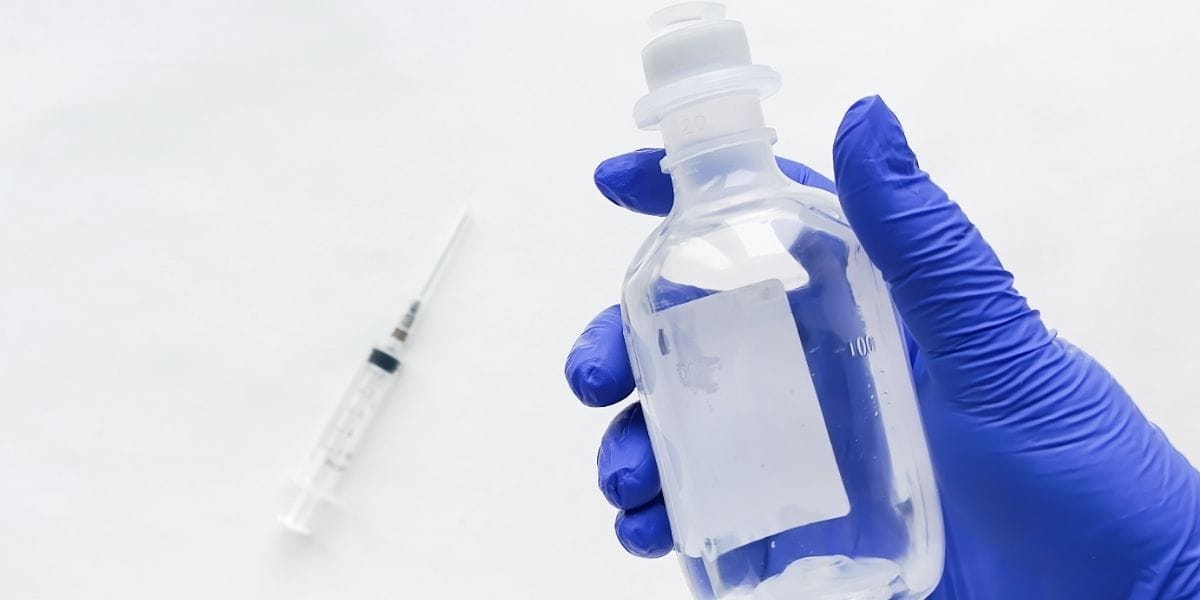
For large volume parenteral (LVP) products, the IV container must be equipped with a plastic cap containing an elastomeric sealing component that allows repeated needle puncture during clinical use.
Although this appears to be a simple assembly step, the cap plays an important role in overall production efficiency.
To achieve reliable automated assembly, every IV cap must exhibit highly consistent dimensions, stable structural geometry, and excellent positional accuracy. These characteristics allow the cap to be accurately transported, aligned, and welded to the container throughout high-speed production.
Even small variations in dimensions or product geometry can reduce welding quality, interrupt production stability, and increase manufacturing rejects.
Why Two IV Caps Can Perform Differently on the Same BFS Line
Many pharmaceutical manufacturers assume that two IV caps with identical specifications should perform identically on the same BFS equipment. In practice, this is often not the case.
The difference lies in manufacturing precision.
Traditional thermoset rubber combination caps are manufactured through separate production processes before the rigid plastic and rubber components are assembled together. Variations introduced during molding, curing, and assembly can affect dimensional accuracy and structural consistency.
By comparison, polymer co-injection molded caps are manufactured using synchronized high-precision co-injection molding technology. The rigid plastic component and soft elastomer sealing component are formed together within the same precision mold, producing a single integrated structure.
As a result, co-injection molded IV caps typically achieve higher dimensional accuracy, tighter manufacturing tolerances, and greater consistency from part to part.
These advantages become particularly important on fully automated BFS production lines, where even minor dimensional variations can affect feeding, positioning, welding strength, and overall production efficiency.
Higher Welding Performance Through Precision Manufacturing
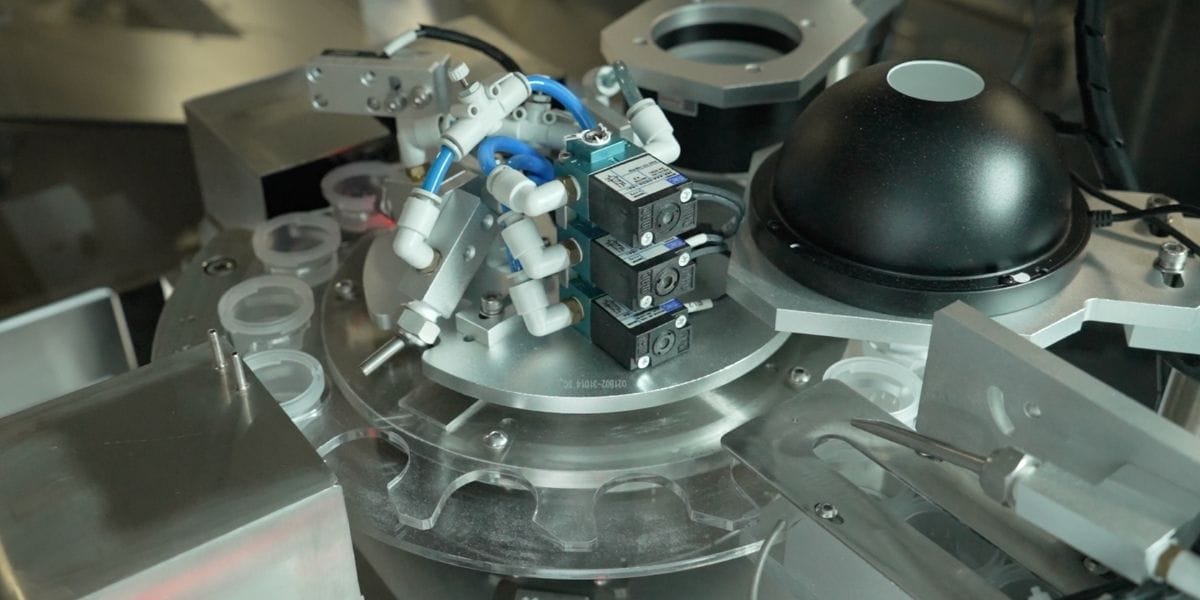
Successful welding depends on much more than simply matching nominal dimensions.
Consistent wall thickness, precise geometry, stable sealing surfaces, and repeatable positioning all contribute to stronger and more reliable welds between the IV cap and the plastic container.
Because co-injection molded caps are manufactured as an integrated component using precision tooling, they generally provide better welding consistency than conventionally assembled combination caps.
Improved welding supports BFS production line performance by reducing rejects, improving line efficiency, and maintaining stable production during high-speed BFS operations.
JSD Cap®: Precision Designed for BFS Production
A practical example is JSD Cap (TPE Euro Cap). Although it shares the same overall structure as conventional thermoset rubber combination caps, its manufacturing technology is fundamentally different. JSD, being a dedicated blow-fill-seal packaging manufacturer, engineers every component of the JSD Cap specifically to perform under the demands of automated BFS production, where dimensional consistency and weld reliability are not optional.
Using precision co-injection molding, the rigid plastic body and the soft TPE sealing component are molded together in a single process. This integrated manufacturing approach delivers superior dimensional accuracy, highly consistent product geometry, and improved welding performance.
As a result, both conventional combination caps and JSD Caps can be used on the same BFS production line, but the precision manufacturing of the co-injection molded design enables more stable feeding, more accurate positioning, and stronger, more consistent welds. Contact JSD today to find out how JSD Cap can improve line stability and output quality on your BFS filling system.
Conclusion
The performance of an IV cap on a blow-fill-seal production line depends on far more than its external dimensions.
Dimensional precision, structural consistency, manufacturing quality, and welding performance all influence the stability and efficiency of automated BFS production. Precision co-injection molded IV caps provide tighter tolerances and more consistent manufacturing than conventional assembled combination caps, allowing pharmaceutical manufacturers to improve production reliability while maintaining the demanding quality standards required for sterile IV packaging.
JSD’s expertise in blow-fill-seal packaging closures is built on decades of precision engineering and proprietary material science, giving pharmaceutical manufacturers a closure solution that performs consistently at every stage of automated production. Contact JSD today to discuss how our Euro Cap technology can support the reliability and quality of your BFS filling line.
